
Lebanon: Hezbollah sets conditions on weapons talks as raids continue in the south
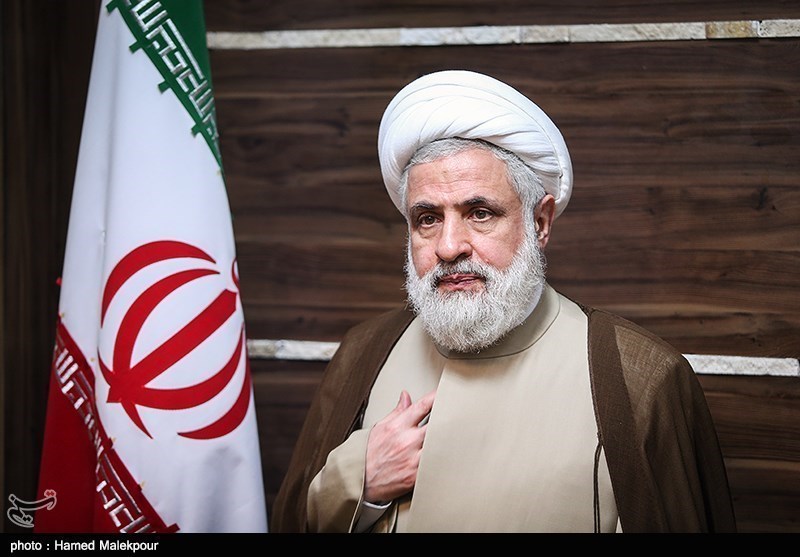
Naim Qassem makes discussion conditional on Israeli withdrawal and an end to what he calls external tutelage. On 14 November, three days after Qassem’s speech, reports from the south describe further attacks. This is not yet an announcement of disarmament negotiations.
In brief
Hezbollah’s stated willingness is conditional, not a commitment to hand over weapons. On the ground, correspondents and the national news agency report raids and artillery fire on 14 November. The two developments share a context, but do not by themselves demonstrate a direct operational link between the speech and individual attacks.
Frequently asked questions
What did Hezbollah say about its weapons?
Hezbollah’s stated willingness is conditional, not a commitment to hand over weapons. On the ground, correspondents and the national news agency report raids and artillery fire on 14 November. The two developments share a context, but do not by themselves demonstrate a direct operational link between the speech and individual attacks.
Are all southern Lebanon attacks and casualty figures verified?
Qassem’s statement is documented; attack reporting and casualty figures are only partly corroborated.
Has Hezbollah agreed to surrender its weapons?
In Hezbollah’s stated position, the weapons issue remains inseparable from events in southern Lebanon. In the speech of 11 November reported by Euronews Arabic, secretary-general Naim Qassem expressed willingness to discuss even the most difficult issues, including weapons, with the authorities and political forces, but only after Israeli withdrawal and an end to what he describes as external tutelage. [1]
Qassem’s condition
In Hezbollah’s stated position, the weapons issue remains inseparable from events in southern Lebanon. In the speech of 11 November reported by Euronews Arabic, secretary-general Naim Qassem expressed willingness to discuss even the most difficult issues, including weapons, with the authorities and political forces, but only after Israeli withdrawal and an end to what he describes as external tutelage. [1]
This is not an unconditional offer. Qassem challenged the demand to place weapons exclusively in state hands while attacks continue, calling instead for priority to ending the attacks, returning residents to the south and reconstruction. He also urged greater support for the Lebanese army through the public budget and criticized the framework agreement discussed by the authorities. [1]
Before the speech: farmers in Kfar Shuba
The difficulty of returning to everyday life already appears in reporting from 9 November. L’Orient Today reports that an Israeli patrol stopped residents heading to olive groves in Shanouh, near Kfar Shuba, despite permission obtained through the ceasefire-monitoring mechanism. According to correspondent Muntasser Abdallah, the farmers finally reached their land after obtaining a new permit. [5]
The same article reports statements by Israeli military spokesperson Ella Waweya about two weapons depots in Mais al-Jabal and an operational apartment in Tiri, described as near UNIFIL positions. These are Israeli allegations in the 9 November account, not a specific response to the raids of 14 November. The article also records a drone strike around Jarmak, outside the occupied zone described by the outlet. [5]
Reports from the south on 14 November
On 14 November, three days after Qassem’s speech, reports from the area describe attacks across several districts. Citing its own correspondent in the south, L’Orient Today reports that a morning raid destroyed a house in Kfar Tebnit and that another home hit by artillery caught fire. The outlet also reports firing around Kfar Shuba, Haddatha and Braasheet, and military-vehicle movements in Arnoun. [2]
Daily Beirut, relaying Lebanon’s National News Agency, describes two raids between Nabatieh al-Fawqa and Kfar Tebnit, explosions in Al-Qantara and artillery fire on Baraachit and Hadatha. [3] Al-Manar also reports an attack on Kfar Tibnit and artillery shelling elsewhere, attributing the information to its own correspondent. [4]
Different transliterations do not necessarily identify different places: Kfar Tibnit and Kfar Tebnit, for example, are spellings used in the consulted reports. We do not add the reports together as though every republication described a new event. Convergence on an area supports the core account, but does not automatically provide a complete inventory of attacks and damage.
Why hearing an explosion is not enough
The correspondents’ reporting also contains a useful distinction that guards against hasty conclusions. L’Orient Today reports that explosions heard in the Anti-Lebanon mountains were related to Lebanese army exercises, according to its correspondent in the Bekaa. [2] Even within the same news cycle, therefore, not every noise or image of smoke should be attributed to the same actor.
For the raids cited in the south, this verification did not retrieve a specific Israeli statement that would allow declared targets to be compared with individual reported locations. That absence is not an Israeli denial, nor does it justify inventing a response. We do not present a definitive casualty toll for the incidents of 14 November.
Traffic light: YELLOW for the development of the weapons issue and the operational picture. The conditional position is documented through Euronews; reporting supports the occurrence of attacks, but tolls and a full comparison of accounts remain unresolved.
Sources
[1] Euronews Arabic, Qassem’s speech of 11 November 2026. [2] L’Orient Today, reporting from southern Lebanon, 14 November 2026. [3] Daily Beirut, report relaying NNA, 14 November 2026. [4] Al-Manar, report of 14 November 2026.